Some people spend their whole lives working, saving, investing, budgeting, couponing, and pretending store-brand cereal tastes the same.
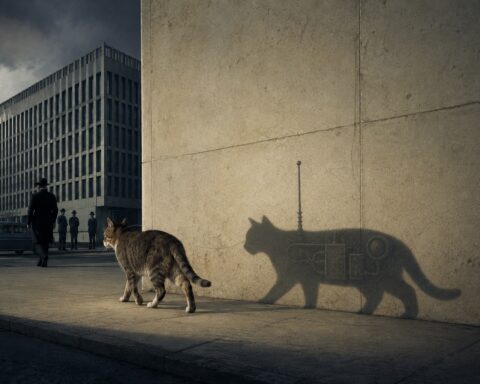
Blackie the cat simply existed.
In 1988, Blackie became famous as the cat who reportedly “inherited” a fortune after the death of his owner, British antiques dealer Ben Rea. According to Guinness World Records, Rea died in May 1988 and left a fortune worth £7 million, or about $12.5 million at the time, connected to the care of Blackie, the last surviving of the 15 cats Rea had shared his mansion with. Guinness still lists Blackie as the wealthiest cat.
This is the kind of story that sounds like it was invented by a cat.
A wealthy recluse.
A mansion full of felines.
A family cut out of the will.
A black cat becoming richer than almost everyone you know.
It has all the ingredients of a gothic British comedy, except the cat was real, the money was real, and the inheritance drama was apparently serious enough to earn a place in the record books.
Meet Blackie, the Millionaire Cat

Blackie belonged to Ben Rea, a British millionaire antiques dealer who lived in Dorney, Buckinghamshire. Rea was reportedly reclusive and shared his mansion with 15 cats over the years. By the time he died, Blackie was the last surviving cat from that feline household.
There is something deeply cat-like about becoming the final heir by simply outlasting everyone else.
No business plan.
No networking.
No passive income strategy.
Just naps, survival, and possibly judgmental staring.
Rea had family, but according to Guinness World Records, he refused to recognize them in his will. Instead, the majority of his wealth was split among three cat charities with instructions that they look after Blackie for the rest of his life. Rea also reportedly left smaller amounts to his gardener, mechanic, and plumber, and left a home to his friend Ken Randolph.
So, yes, the headline version is true:
Blackie became the cat associated with a multimillion-pound fortune.
But the legal reality is slightly more grounded.
Blackie did not walk into a bank wearing a tiny waistcoat and open a high-yield savings account. The money was not handed directly to the cat in the way it might be left to a human heir. Instead, the fortune was reportedly placed with charities, with the instruction that Blackie be cared for.
Which is probably for the best, because if a cat had full legal control of £7 million, it would immediately buy one cardboard box, ignore the rest, and knock an antique vase off a shelf.
The Will That Skipped the Humans
One of the most striking parts of the Blackie story is not just that a cat became rich. It is that the humans apparently did not.
Ben Rea reportedly left his family out of his will. Guinness describes him as a recluse who refused to recognize his family in the document. Instead, most of the fortune went to animal charities that cared for his beloved pet.
That detail turns the story from “cute rich cat anecdote” into a full inheritance drama.
Imagine being related to a millionaire, only to learn that the money went to the cat.
Not even a charming dog who greets people at the door. A cat. An animal famous for acting like it is doing you a favor by living in your house.
To be fair, we do not know the full family history. Rea may have had personal reasons for his decision, and it would be irresponsible to invent undocumented motives. What we can say is that the will became famous because it placed Blackie, and Blackie’s care above the usual human beneficiaries.
That is the part people remember.
Not the estate paperwork.
Not the mechanics of charity administration.
The cat.
Did Blackie Really Inherit the Money?
Blackie’s fortune was not quite as simple as a cat being handed a pile of cash and a fountain pen.
According to Guinness World Records, Ben Rea’s estate was largely divided among three cat charities, with the understanding that they would care for Blackie for the rest of his life. The money was tied to the cat’s care, not placed under Blackie’s personal control.
That may sound like a technicality, but it is an important one. Pets cannot manage an estate, sign legal documents, or decide whether to diversify into bonds. When people leave money for animals, the money typically has to be controlled by a person, trust, charity, or organization that handles the practical care.
So Blackie was not a millionaire in the human sense. He did not own property, manage investments, or sit through meetings with estate lawyers.
He simply became the cat at the center of a multimillion-pound inheritance arrangement.
For a black cat in a British mansion, that was more than enough.
Why Guinness Still Counts Blackie
Blackie’s record is especially interesting because Guinness has been careful with other “richest pet” stories.
In its 2023 article about Blackie, Guinness noted that the fact the money was left through charities, rather than directly to Blackie, is part of why the record still stands. Guinness also contrasted Blackie’s case with the famous “Gunther” dog fortune story, which it later stopped recognizing after doubts emerged about the evidence behind that tale.
That actually makes Blackie’s story stronger.
It is not just a random internet list claiming a pet has a giant net worth. It is a record Guinness continues to recognize, with a clear explanation of why the inheritance arrangement was considered credible enough to stand.
In other words, Blackie is not merely “some cat people say was rich.”
Blackie is officially the kind of cat who could look down on you financially.
Which, to be fair, cats already do emotionally.
A Fortune Fit for a Feline
The original fortune is usually reported as £7 million, or about $12.5 million in 1988. Guinness has estimated that sum would be worth around £18.5 million, or roughly $32 million, in more recent terms.
That is a staggering amount of money for any pet.
It is enough to fund luxury food, private caretakers, medical care, a small castle’s worth of scratching posts, and still leave enough for the cat to act unimpressed by all of it.
But the strange part is not simply that Ben Rea wanted Blackie cared for. Plenty of people make arrangements for pets in their wills. The strange part is the scale. A fortune large enough to change a human family’s life was instead tied to the comfort of one black cat.
Blackie probably did not understand he was rich. That may be the funniest part.
Humans see wealth as status, opportunity, and power. Cats see everything as already belonging to them.
A regular cat and a millionaire cat behave almost exactly the same.
They both sleep wherever they want.
They both ignore expensive gifts.
They both believe your chair is their chair.
They both treat closed doors as personal insults.
Blackie’s fortune changed the way humans talked about him. It probably did not change the way Blackie talked to humans, which was almost certainly not at all unless food was involved.
Was Blackie Spoiled?
Almost certainly, but carefully.
We do not have a reliable day-by-day account of Blackie’s post-inheritance lifestyle. There are no verified reports of him buying tiny yachts, investing in sardine futures, or demanding a gold-plated litter box.
What we know is that Rea’s money was reportedly assigned to charities with the instruction that Blackie be looked after. Guinness says the charities could receive the funds only if they agreed to care for the cat.
So any details beyond that should be treated as imagination, not fact.
Still, it is fair to assume Blackie’s basic needs were covered. Food, shelter, veterinary care, and comfort would have been the point of the arrangement. Whether Blackie appreciated any of this is another question.
Cats are notoriously difficult beneficiaries. You can leave them millions, and they will still prefer the cardboard box the paperwork came in.
Final Verdict
So, is the story of Blackie the cat true?
Yes, with one important clarification.
Blackie is recognized by Guinness World Records as the wealthiest cat, connected to a fortune of £7 million left by his owner, Ben Rea, after Rea’s death in May 1988. Rea was a millionaire antiques dealer who reportedly shared his mansion with 15 cats, and Blackie was the last surviving one.
But Blackie did not literally receive the money as a human heir would. The majority of the fortune was reportedly split among three cat charities, with instructions to care for Blackie for the rest of his life.